Yesterday was music day in France. If you're not from this part of the world and don't know what music day is, basically it's a national event where anyone is allowed to play music in the streets.
It's supposed to celebrate amateur musicians and on paper, I'm all for this.1 In practice though, I tend not to go.
In big cities such as where I live, it tends to draw huge crowds, and the older I get the less I tolerate being cramped with a mass of people, no matter the occasion. It's not phobic or anything, but it does tend to kill any enjoyment I could otherwise get from what's going on.
Also, and this might be specific to Nantes, the sheer amount of loudspeakers blasting away while located not 100 yards from each other tend to produce a wall of sonic mud that quickly gets tiresome. Call me a snob, but this, in addition to my previous point, tends to ruin the mood for me.
If you enjoy partying in the streets, go for it. But if you're like me, then here's a couple of tips:
-
In city centers, try and find a spot somewhat isolated from the busier streets. You don't have to wander far: a small park, a place, some side street off from the main roads... Anything surrounded by walls or trees to cut off the sound.
Those don't necesserally do much for the crowd, but at least you get to hear one band at a time.
-
If you can, go to a smaller town. You'll see less things, but the overall atmosphere tends to be a lot more relaxed.
Those tend to celebrate music day a day or two before the official June 21st date, so if you'd like to have the louder experience too, you can enjoy both!
And that's it for the travel tips.2
I had planned to stay home and enjoy a nice conversation with my fan, before noticing that I was all out of cigarettes. So if I was gonna head downtown anyway, might as well hang around for a bit.
Stumbled on a friend who was playing in a decent spot (he did have to fight the surrounding noise, but he managed to stay on top of it). So overall, it was allright, and reminded me that's it's been a while since I wrote something about music, so here's a post about my favourite classic guitar lick and how easy it is to adapt to the mandolin.
The Doc lick
If you've listened to bluegrass music for any length of time, then you've heard this lick. It might be older, but Doc Watson is clearly the one who popularized it. You'll spot it everywhere in his playing. Which you should definitely listen to every day, because Doc is Awesome.
It's based on a very simple move I touched on the last time I wrote about bluegrass guitar, which basically consists of rocking back and forth between the minor and major third, making sure that the second of those notes falls on an open string to emphasize the dissonance.
Surround this with a simple motif from the major scale, and you get this:
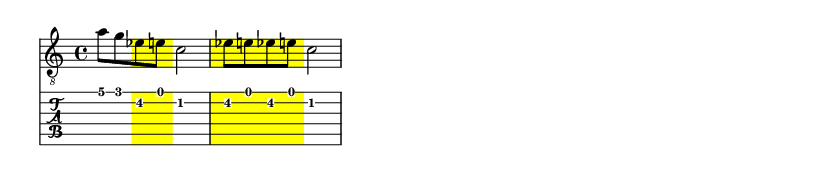
It's really all about the two highlighted notes. Everything around it is just idiomatic filler, and there's a million possible variations you could come up with.
A very simple one I like to use is to simply turn the first two notes into a triplet:
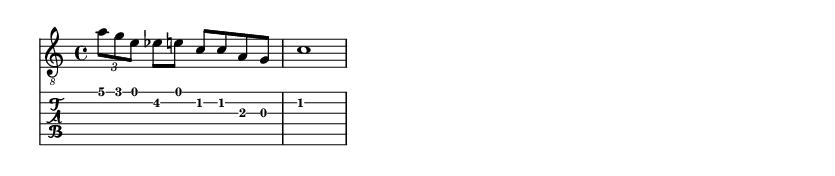
Of course, you can also repeat the dissonant pair. Doc tends to stick to playing it twice, while Billy Strings likes to keep going and get real nasty before resolving.
Personally, I quite like repeating the whole four note motif when it's appropriate:
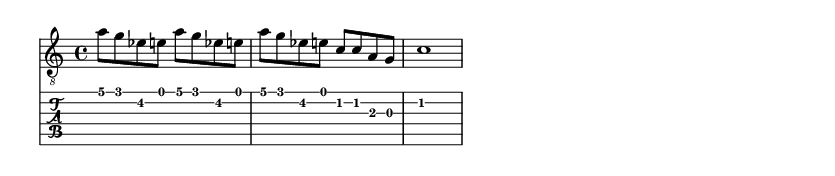
It's trickier than it looks and sounds best on faster tunes. I should definitely work on it to clean it up, but it's a nice way to fill up space without having to think too much, even though that one could get tiresome if used too often, so chose your moment wisely.
The lick is typically played out of the C position, but it works great in G, too:
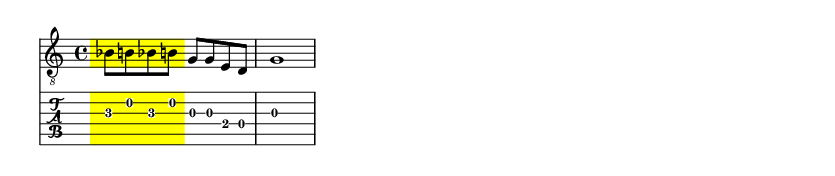
For some reason, it's much rarer to hear it in this key, even though Doc himself plays it right in the first measure of Beaumont Rag:
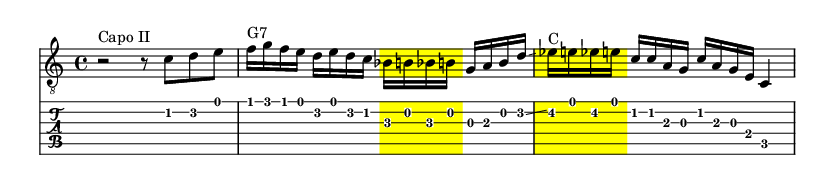
(Not an exact transposition of his version, but close enough to get the point.)
Again, this is just the tip of the iceberg. It's one of those licks you could spend your life exploring, and many have already. And it's certainly one that creeps up again and again in my own playing.
I thought this post was about mandolin
The one question I did not ask myself was how to transpose this lick to the mandolin.
Instead, it happened by accident. I just goofed up while fooling around in the key of C and recognized that classic dirty third color. From there, it wasn't hard to reproduce the whole lick:
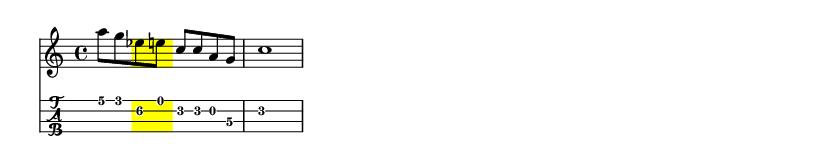
It looks and feels very similar to the guitar version, so it's quite natural to pick up despite the different scale layout (the one bit that trips up my six-stringer brain is the open A, but that's not too bad. I guess I could grab it on the third string (seventh fret), though. I'll have to experiment and see which version sounds better3).
I played with it for a while, and then wondered why I couldn't seem to recall hearing that particular move played on mandolin.
I could be way off base, here. I haven't really gone fishing for mandolin licks yet, and mostly kept to exploring the fretboard on my own. Also, my ear isn't that great, and seems to recognize familiar patterns rather than actual notes or melodic motifs, so while I enjoy hearing other instruments doing their thing, I often have a hard time figuring out what they're playing.
Still, that color is distinctive enough that it feels like I should recognize it when it happens.
I'm sure it does crop up and that I'll think of an example right after publishing this article. But assuming it is used less often, the reason why is probably pretty simple.
Bluegrass guitar player are infamous for using capos and playing everything out of G or C, so the Watson lick is always right under our fingers. Also, Doc was such a huge influence on the genre that you're bound to come across it over and over, so it's no wonder that it quickly becomes a no-brainer.
Mandolinists tend not to use cheaters so much,4 though, and while you could move this lick to a closed position,5 it kind of needs the third to fall on an open string to truly shine, which drastically limits the number of keys where it's available.
The version I notated above is in C, and moving it to the lower strings lands you in F or in B flat, which are much less common than A or D in Bluegrass or Old Time.
They do happen, though, and they're also a lot more common in jazz, so I hope I'll think of it next time I end up jamming on a swing tune. Haven't tried it yet, but I'm pretty sure it'll fit and I would hate to miss the chance to troll jazzers with some country twang.
So try it out when you get a chance. Stealing from other instruments is always fun, and stealing from Doc is even better. There's no reason why guitarists should be the only ones allowed to do so.
Here's one more for the road, this time in context (if playing at random and out of time qualifies as "context"):
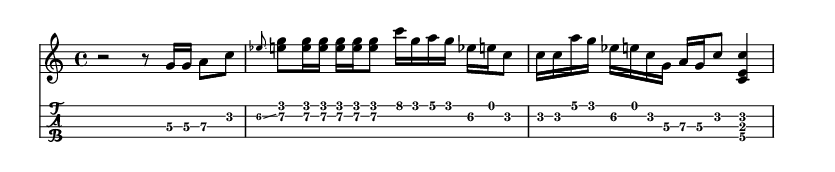
See ya internet, and keep on picking!
-
Coming from me, "amateur" is not a slur.
In fact, I'd argue that we should have something like it for all other art forms. Theater, painting, hula hooping...
Amateur art is important, and should be encouraged and celebrated, but why should music be the only discipline to get its national day ? ↩
-
What do you mean, those would have been more useful had them been published before music day ? ↩
-
I suspect they'll both sound fine on their own but have a slightly different feel that will fit better depending on the situation. That's how those things usually turn out. ↩
-
I used to wonder why, but I'm starting to get it. Mandolin, at least in Bluegrass, tend to rely a lot less on open strings (especially when playing backup, when you don't want anything ringing), so capos just don't make as much sense.
I'll still look for a chance to use one just to piss off the purists. ↩
-
A six fret span on the mandolin is only slightly uncomfortable, which sounds crazy to my guitarist's brain. ↩